Dubai, the second‑largest and second‑most populous constituent emirate of the United Arab Emirates, spans roughly 1,510 square miles (3,900 km²) with a 45‑mile (72 km) Persian Gulf coastline. Its capital city, also named Dubai, anchors more than 90% of the emirate’s population along the northeastern creek and adjacent urban zones. Bordered by Abu Dhabi to the south and west and Sharjah to the east and northeast, Dubai also claims the Al‑Ḥajarayn exclave in Wadi Ḥattā, located over 25 miles (40 km) from the main territory.
Early Settlement and Political Consolidation
Documented since 1799, Dubai remained under Abu Dhabi’s influence until 1833, when the Āl Bū Falāsah branch of the Banū Yās confederation—primarily pearl fishers—peacefully assumed control. Leveraging regional rivalries, successive Maktoum sheikhs preserved autonomy, signing maritime truces with Britain in 1835 and 1853, and entering the Exclusive Agreement of 1892 that placed foreign affairs under British oversight. In 1971, Dubai emerged as a charter member of the newly independent UAE federation.
Trade‑Driven Growth and Monetary Integration
By the 20th century, Dubai had established itself as a pivotal port and trading hub, drawing multicultural merchant communities—especially Indian traders—and exporting pearls until the 1930s. Post‑1966, following the devaluation of the Gulf rupee, Dubai co‑created the Qatar‑Dubai riyal and, in 1973, adopted the UAE dirham. Dubai’s open gold market fueled legitimate trade and informal gold flows to India, capitalizing on cross‑border demand imbalances.
Oil Discovery and Industrial Diversification
While Dubai’s oil reserves pale compared to Abu Dhabi’s, the 1966 Fateh field discovery catalyzed infrastructure investment, including three seabed storage tanks—dubbed the “Three Pyramids”—each holding 500,000 barrels. Late‑1970s expansions introduced aluminum smelting and natural‑gas fractionation plants, diversifying revenues beyond hydrocarbons.
Infrastructure and Transport Renaissance
In the 1970s and ’80s, Dubai launched Port Rashid (1972) and Port Jebel Ali with industrial free‑zone status, attracting global firms and birthing the Dubai Ports Authority in the early 1990s. Dubai International Airport and the government‑backed Emirates Airline, established mid‑1980s, cemented the emirate’s role as an aviation nexus. September 2009 marked the debut of the Gulf’s first driverless metro system, alleviating road congestion and enhancing urban mobility.
Urban Iconography and Investment Cycles
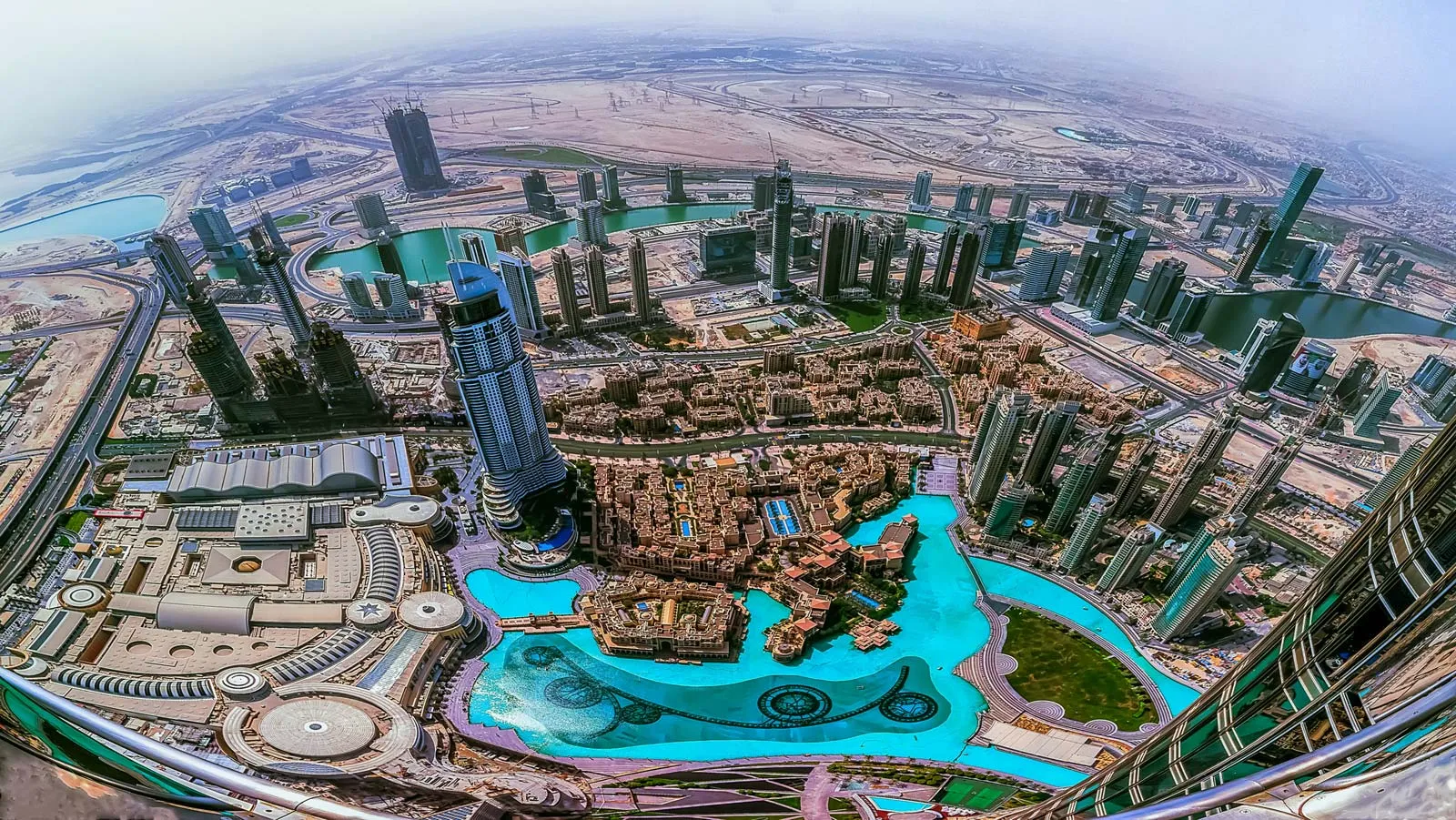
The early 21st century showcased Dubai’s transformational agenda: the Desert Camel Racecourse, luxury hospitality complexes, and megaprojects like the Burj Khalifa. While the 2009–2010 financial crisis exposed high leverage and unsold real‑estate stock, a $10 billion Abu Dhabi bailout stabilized markets. The decision to rename Burj Dubai as Burj Khalifa honored that inter‑emirate solidarity.
Population Dynamics and Outlook
By 2020, Dubai’s population reached an estimated 3.41 million, sustained by dynamic trade, tourism, finance, and logistics sectors. As the emirate continues to integrate heritage with innovation—expanding free zones, upgrading transport networks, and spearheading smart‑city initiatives—it remains poised to reinforce its position as a global gateway and strategic economic powerhouse.