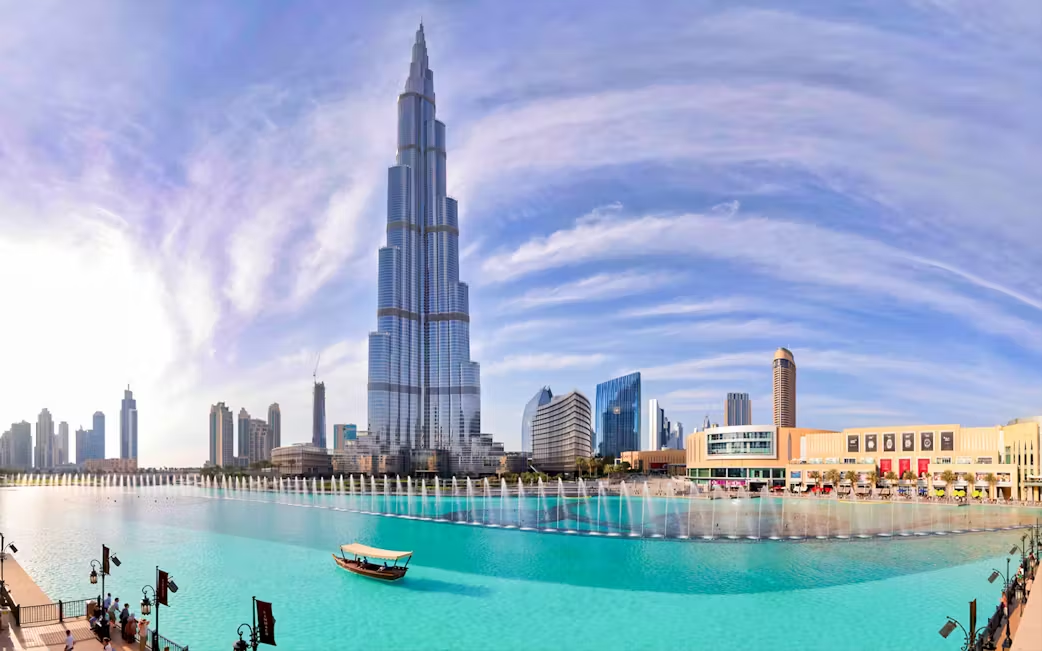
Towering over the Dubai skyline, the Burj Khalifa stands as an emblem of human ambition and engineering excellence. Located in the United Arab Emirates, it currently holds the title of the tallest building in the world, based on all three internationally recognized height measurement criteria.
Initially referred to as Burj Dubai during its construction phase, the skyscraper was renamed in tribute to Sheikh Khalifa bin Zayed Al Nahyan, the late ruler of Abu Dhabi, in recognition of his support for Dubai during a critical financial period. While the structure was officially inaugurated on January 4, 2010, its interior spaces continued to be developed after the grand opening.
Design and Structural Ingenuity
The Burj Khalifa is more than just a record-breaking building—it’s a masterpiece of architectural strategy and structural innovation. It features a Y-shaped floor plan inspired by the Hymenocallis flower, a native species in the region. This tri-lobed design helps minimize the impact of wind forces, a significant challenge when building at such extreme heights.
Designed by the renowned Chicago-based architectural firm Skidmore, Owings & Merrill, the project was led by architect Adrian Smith and structural engineer William F. Baker. The structure consists of a central hexagonal core flanked by three wings. Each wing is supported by its own core and a ring of perimeter columns. As the tower ascends, these wings recede in a spiraling pattern, continually altering the building’s shape to further reduce wind load.
Crowning the tower is a spire that contributes more than 200 meters (over 700 feet) to the overall height. This spire was assembled inside the building and carefully lifted into place using a hydraulic jack system—another feat of modern engineering.
Foundation and Exterior
The immense height of the tower is matched by its robust foundation. A massive concrete mat, nearly 4 meters (13 feet) thick, rests on a series of deep concrete piles, each with a diameter of about 1.5 meters (5 feet). The base of the tower is anchored by a three-level podium, which, along with a two-story basement, spans an enormous area of approximately 186,000 square meters (2 million square feet).
The exterior is equally impressive, clad in a combination of aluminum, stainless steel, and more than 28,000 individually hand-cut glass panels. Vertical stainless-steel fins accentuate the height and elegance of the design.
A Symbol of Progress
Reaching a staggering 828 meters (2,717 feet) with 163 floors, Burj Khalifa shattered previous height records, easily surpassing the Taipei 101 in Taiwan, which stood at 508 meters (1,667 feet). In addition to claiming the record for the tallest building, it also earned titles for the tallest free-standing structure, the highest occupied floor, and the loftiest outdoor observation deck in the world.
Visitors can experience its breathtaking views from the “At the Top” observation deck on the 124th floor, offering a panoramic perspective of Dubai’s ever-evolving cityscape.