
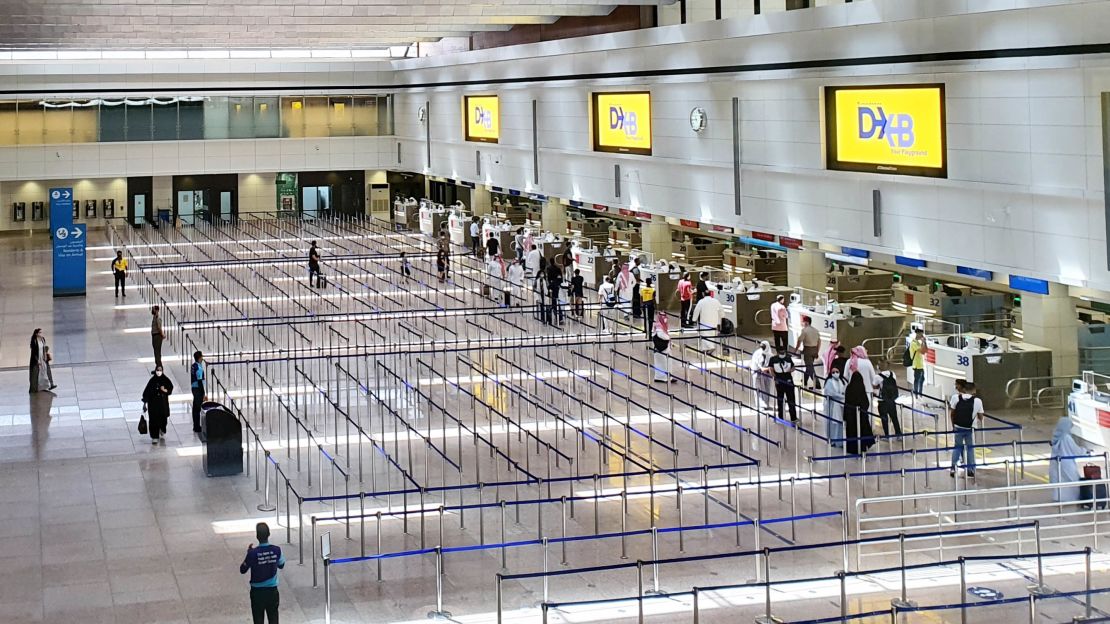
As the Middle East conflict triggered by joint US-Israel strikes on Iran entered its fourth day on Tuesday, a small number of stranded travelers began departing the United Arab Emirates (UAE) on limited evacuation flights. However, most commercial air travel across the region remains suspended due to ongoing hostilities and airspace restrictions.
The departures from Dubai and Abu Dhabi on Monday offered brief relief to hundreds of passengers left stranded since the escalation began. Airports in the UAE, typically among the busiest global transit hubs, have been operating at reduced capacity as airlines cancelled or rerouted flights amid widespread airspace closures across parts of the Gulf and neighboring countries.
The crisis deepened after the US State Department urged American citizens in 13 countries — including the UAE, Jordan, Saudi Arabia, Egypt, Lebanon and Oman — to “depart now via commercial means due to serious safety risks.” Yet sweeping shutdowns of regional airspace and extensive flight cancellations have significantly limited the ability of many to comply with the advisory.
Intensified Strikes and Expanding Retaliation
According to official statements, Israeli and American airstrikes continued to pound targets inside Iran as the military campaign intensified. US President Donald Trump said on Monday that operations could extend for several weeks, describing the campaign as “massive and ongoing.”
In retaliation, Tehran and allied groups launched counterattacks targeting Israel and several strategic sites across the Gulf region. Reports indicated strikes on energy infrastructure in Qatar and attempted attacks near the US Embassy in Saudi Arabia, raising fears of broader regional involvement.
The scale of bombardment and the reported killing of Iran’s Supreme Leader Ayatollah Ali Khamenei have dramatically heightened tensions. Analysts say the absence of a clear diplomatic pathway to de-escalation signals the risk of a prolonged and destabilizing conflict with global ramifications.
UAE Airports Under Pressure
Locations long considered among the safest in the Middle East — including Dubai and Abu Dhabi — have now been drawn into the ripple effects of the conflict. Although no direct large-scale damage has been reported within the UAE, heightened security measures have been implemented across major transport hubs and key infrastructure sites.
Airlines operating through Dubai International Airport and Zayed International Airport in Abu Dhabi have suspended multiple routes across Iran, Iraq, Israel, and parts of the Levant. Aviation authorities continue to monitor the rapidly evolving security situation.
Oil Markets and Global Impact
The conflict has already sent shockwaves through global markets. Oil and gas prices surged sharply as investors reacted to fears of supply disruptions in the Gulf — a region critical to global energy exports. Energy facilities in neighboring countries remain on high alert following reported missile and drone activity.
Meanwhile, American allies in the region have pledged assistance in intercepting Iranian missiles and drones, reinforcing air defense systems amid escalating cross-border exchanges.
Uncertain Days Ahead
With evacuation efforts only partially underway and diplomatic channels appearing stalled, thousands of travelers remain stranded across the region. Governments are coordinating repatriation flights where possible, but aviation experts warn that normal air travel operations could remain disrupted for an extended period.
As military operations continue and retaliation intensifies, the Middle East stands at a precarious crossroads, with implications extending far beyond the region.