
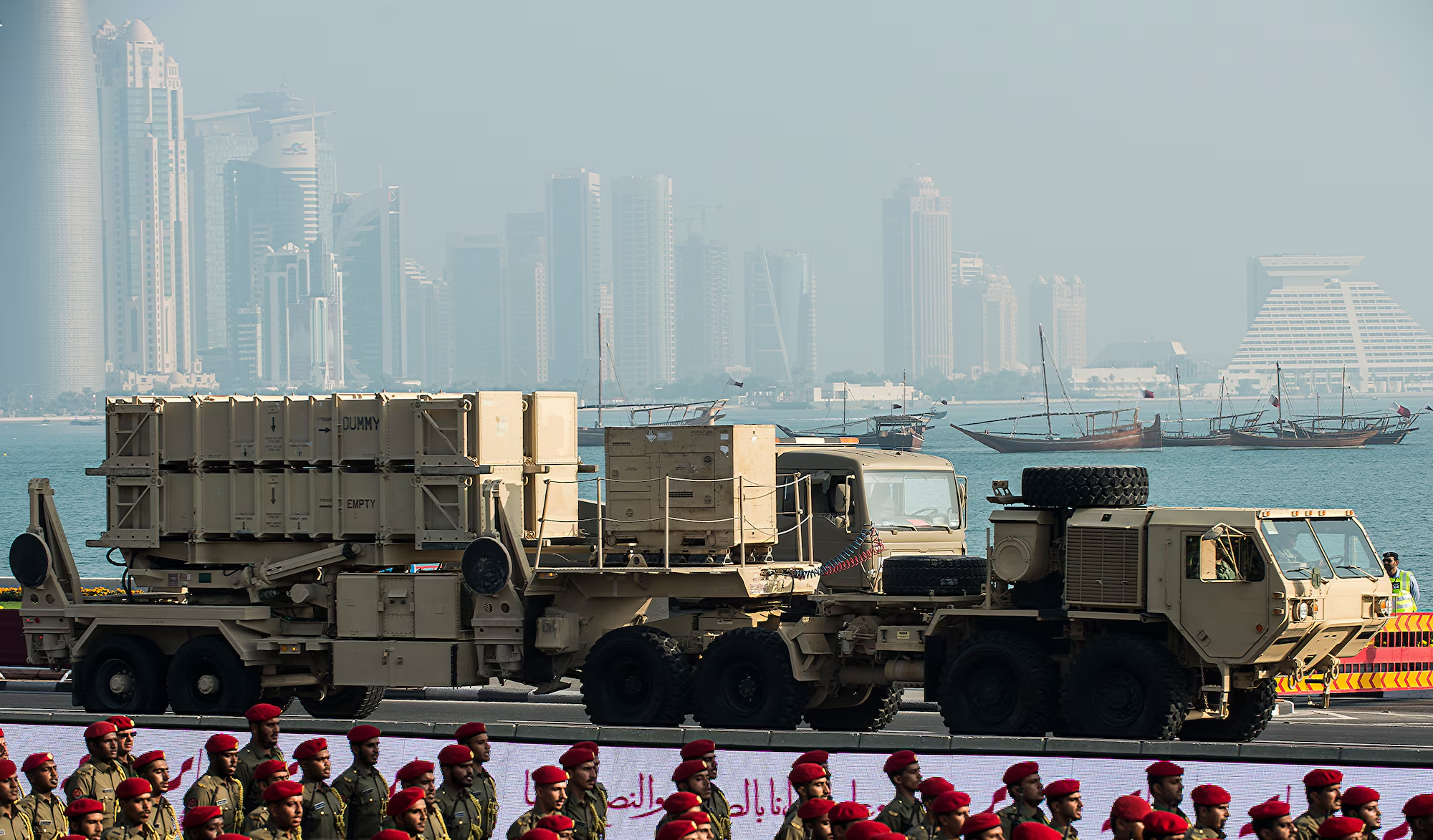
The United Arab Emirates and Qatar have reaffirmed their full defensive readiness after a Bloomberg report raised questions about Gulf states’ preparedness amid the escalating military conflict involving the United States, Israel and Iran.
Officials in both countries stressed that their defence systems remain fully operational and capable of protecting national security, as the conflict — which began on February 28 — continues to intensify across the region.
UAE, Qatar Reassure on Defence Capabilities
Authorities in the UAE and Qatar responded firmly to external assessments of their military preparedness, emphasizing that advanced air defence systems are actively monitoring and intercepting aerial threats.
The reassurance comes as drone and missile activity has increased across several Gulf nations, prompting heightened security measures at airports, energy infrastructure facilities and diplomatic missions.
Drone Attack on US Embassy in Riyadh
In Saudi Arabia, the Ministry of Defence confirmed that the United States Embassy in Riyadh was targeted by two drones. According to officials, the attack resulted in a “limited fire,” which was quickly brought under control. No major casualties were reported.
Saudi air defence systems successfully intercepted the drones, authorities said, underscoring the growing use of unmanned aerial systems in the widening conflict.
Fire in Fujairah After Drone Interception
In the UAE, officials confirmed that falling debris from a successfully intercepted drone caused a fire in Fujairah. The blaze was swiftly contained, and emergency teams secured the area without reports of serious injuries.
The incident highlights how even successful interceptions can create secondary risks on the ground, adding to public anxiety in areas traditionally viewed as secure.
Nearly 13,000 Flights Cancelled
The aviation sector continues to face unprecedented disruption. Data shows that nearly 13,000 flights have been cancelled across GCC and Middle East countries since the outbreak of hostilities involving the US, Israel and Iran.
Major transit hubs in Dubai, Abu Dhabi, Doha and Riyadh have experienced widespread cancellations and rerouting, stranding thousands of travelers and disrupting global air traffic corridors that connect Europe, Asia and Africa.
Airlines are working to adjust flight paths around closed or restricted airspace, but aviation analysts warn that normal schedules may take weeks to fully restore.
Death Toll in Iran Climbs to 787
Meanwhile, the humanitarian toll continues to rise. Reports indicate that the death toll from US-Israel strikes inside Iran has climbed to 787, marking one of the deadliest escalations in recent regional history.
The scale of casualties, combined with continued retaliatory attacks across multiple countries, signals the potential for a prolonged and deeply destabilizing conflict with significant geopolitical and economic consequences.
Region Faces Uncertain Path Ahead
With drone warfare expanding, airspace closures mounting, and diplomatic solutions appearing distant, Gulf nations remain on high alert. Governments across the region have reiterated their commitment to safeguarding civilians and critical infrastructure while calling for de-escalation.
As tensions remain high and military operations continue, the Middle East stands at a critical juncture with implications that extend well beyond its borders.